Ten people you may not have known were teachers.
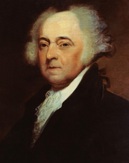
1) John Adams was not the only U.S. President to have taught school, but he was the first to have done so. After his graduation from Harvard, he became the master of the grammar school in Worcester, Massachusetts. Adams did not enjoy the post. He described his students as “little runtlings, just capable of lisping A, B, C, and troubling the master.”
2) Alexander Graham Bell is best known to us as the inventor of the telephone, of course, but he had broad interests in sound, elocution, and speech. His mother and his wife were deaf, a significant factor in his experimentation with devices to improve hearing, culminating in the telephone. Bell taught at Susanna E. Hull’s private school for the deaf in London, working on his experiments in his spare time.
2) Alexander Graham Bell is best known to us as the inventor of the telephone, of course, but he had broad interests in sound, elocution, and speech. His mother and his wife were deaf, a significant factor in his experimentation with devices to improve hearing, culminating in the telephone. Bell taught at Susanna E. Hull’s private school for the deaf in London, working on his experiments in his spare time.
3) Gail Borden was an inventor and businessman. In 1853 he applied for a patent for a method of removing 75% of the water from milk and adding sugar to what remained, a process that led to a stable shelf-life. Borden soon established a food company to sell his evaporated milk. It would become Borden foods with its recognizable mascot, Elsie the Cow. (The company went under in 2001, but many of it more popular products were bought out by other manufacturers). As a young man, Borden taught school for seven years in Amite County, Mississippi.
4) Levi Coffin was an anti-slavery activist and is often referred to as the “President” of the underground railroad, which he supported financially and by using his home in Fountain City, Indiana as a safe house for escaped slaves. As a young man, Coffin taught in a school for whites for several years in New Garden, North Carolina. In 1821 he tried to open a school for black pupils, but local slave-holders forced its closure. He moved to Indiana three years later.
4) Levi Coffin was an anti-slavery activist and is often referred to as the “President” of the underground railroad, which he supported financially and by using his home in Fountain City, Indiana as a safe house for escaped slaves. As a young man, Coffin taught in a school for whites for several years in New Garden, North Carolina. In 1821 he tried to open a school for black pupils, but local slave-holders forced its closure. He moved to Indiana three years later.
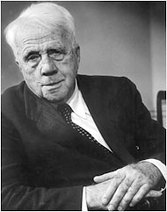
5) Robert Frost may be the most beloved American poet, known for his depictions of New England rural life. After making a marginal living as a farmer, Frost taught English at the Pinkerton Academy in Derry, NH for five years. Doubtless from this experience, Frost offered many quotable thoughts on education, such as “There are two kinds of teachers: the kind that fill you with so much quail shot that you can’t move, and the kind that just gives you a little prod behind and you jump to the skies.”
6) Andy Griffith is best known for his television roles on the Andy Griffith Show and Matlock, but he first made his name in 1953 with a big-selling comedic monologue, What it was, was football. Before that first success Griffith was a high school music teacher in Goldsboro, North Carolina. Curiously, other cast members from the Andy Griffith Show had similar pasts: George Lindsey (“Goober”) was a high school history teacher in Huntsville Alabama, and both Don Knotts (“Barney Fife”) and Frances Bavier (“Aunt Bee”) had intended to become teachers before being persuaded to give acting a try.
(7) Lyndon B. Johnson is viewed, on the one hand, as a man of real compassion. Architect of “The Great Society,” he championed legislative programs for Civil Rights, for government-supported health care for the poor and elderly, increased support for education, and the “War on Poverty.” On the other hand, Johnson is also well known for a larger-than-life personality, and for being very tough when seeking support for his legislative goals. Both personality characteristics might have come in handy in his life as a teacher. Johnson taught at a segregated elementary school for children of Mexican descent in Cotulla Texas in the late 1920s. He later taught public speaking at a high school in Houston. Many of his biographers say that Johnson’s experience as a teacher had a profound impact on him. In a speech given in 1965, Johnson said “I shall never forget the faces of the boys and the girls in that little Welhausen Mexican School, and I remember even yet the pain of realizing and knowing then that college was closed to practically every one of those children because they were too poor. And I think it was then that I made up my mind that this Nation could never rest while the door to knowledge remained closed to any American.”
(8) The reception of D. H. Lawrence’s poems and novels was uneven during his lifetime, but most today view him as one of the great voices of modernism in the early 20th century, and certainly at the vanguard in the treatment of sexuality in the English novel. At the age of 23, Lawrence taught at the Davidson Road elementary school in South London. A still undiscovered writer, he got much support from his fellow teachers, who loaned him books, read his work, and encouraged him. Some are thought to appear as characters in his novels.
6) Andy Griffith is best known for his television roles on the Andy Griffith Show and Matlock, but he first made his name in 1953 with a big-selling comedic monologue, What it was, was football. Before that first success Griffith was a high school music teacher in Goldsboro, North Carolina. Curiously, other cast members from the Andy Griffith Show had similar pasts: George Lindsey (“Goober”) was a high school history teacher in Huntsville Alabama, and both Don Knotts (“Barney Fife”) and Frances Bavier (“Aunt Bee”) had intended to become teachers before being persuaded to give acting a try.
(7) Lyndon B. Johnson is viewed, on the one hand, as a man of real compassion. Architect of “The Great Society,” he championed legislative programs for Civil Rights, for government-supported health care for the poor and elderly, increased support for education, and the “War on Poverty.” On the other hand, Johnson is also well known for a larger-than-life personality, and for being very tough when seeking support for his legislative goals. Both personality characteristics might have come in handy in his life as a teacher. Johnson taught at a segregated elementary school for children of Mexican descent in Cotulla Texas in the late 1920s. He later taught public speaking at a high school in Houston. Many of his biographers say that Johnson’s experience as a teacher had a profound impact on him. In a speech given in 1965, Johnson said “I shall never forget the faces of the boys and the girls in that little Welhausen Mexican School, and I remember even yet the pain of realizing and knowing then that college was closed to practically every one of those children because they were too poor. And I think it was then that I made up my mind that this Nation could never rest while the door to knowledge remained closed to any American.”
(8) The reception of D. H. Lawrence’s poems and novels was uneven during his lifetime, but most today view him as one of the great voices of modernism in the early 20th century, and certainly at the vanguard in the treatment of sexuality in the English novel. At the age of 23, Lawrence taught at the Davidson Road elementary school in South London. A still undiscovered writer, he got much support from his fellow teachers, who loaned him books, read his work, and encouraged him. Some are thought to appear as characters in his novels.
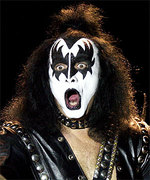
(9) It is hard to believe that Gene Simmons could have been a teacher. He is known best as the frontman for the 1970′s rock band Kiss (right), known for outrageous shows during which Simmons would spit blood, breath fire, and taunt the audience. But Simmons did teach sixth grade in Spanish Harlem. Simmons was reportedly fired for, among other things, replacing the Shakespearean play in the curriculum with Spiderman comics.
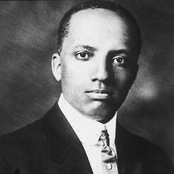
10. Carter G. Woodson is commonly called the Father of Black History. Woodson graduated from Berea College in 1900 and in 1912 was the first African-American of slave parentage to earn a PhD from Harvard University. Woodson believed that the history of Black America had been misrepresented and had not been the subject of serious study. To address the problem, in 1915 he co-founded the Association for the Study of Negro Life and History (later renamed the Association for the Study of African-American Life and History). Woodson was an essential figure in bringing Black history academic credibility as well as popularity–he was also one of the founders of Black History Month. Woodson taught high school in Fayette county while he attended Berea and was named Principal in his last year there. From 1903-1906 Woodson taught in the Philippines while it was a U.S. protectorate, and taught High School again in Washington, D.C. while working on his PhD dissertation in the Library of Congress.
This blog was originally published at Britannica.com
This blog was originally published at Britannica.com




 RSS Feed