David Daniel and I have a letter in latest issue of Science. It's behind a paywall, so I thought I'd provide a summary of the substance.
David and I note that there is, in some quarters, a rush to replace conventional paper textbooks with electronic textbooks. It is especially noteworthy that members of the Obama administration are eager to speed this transition. (See this report.)
On the face of it, this transition is obvious: most people seem to like reading on their Nook, Kindle or iPad--certainly sales of the devices and of ebooks are booming. And electronic textbooks offer obvious advantages that traditional textbooks don't, most notably easy updates, and embedded features such as hyperlinks, video, and collaboration software.
David and I note that there is, in some quarters, a rush to replace conventional paper textbooks with electronic textbooks. It is especially noteworthy that members of the Obama administration are eager to speed this transition. (See this report.)
On the face of it, this transition is obvious: most people seem to like reading on their Nook, Kindle or iPad--certainly sales of the devices and of ebooks are booming. And electronic textbooks offer obvious advantages that traditional textbooks don't, most notably easy updates, and embedded features such as hyperlinks, video, and collaboration software.
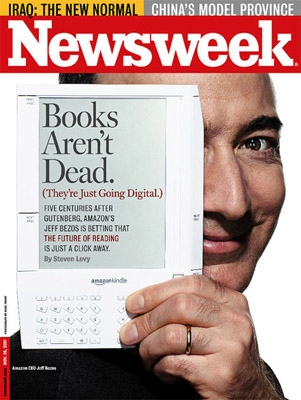
But David and I urged more caution.
We should note that there are not many studies out there regarding the use of electronic textbooks, but those that exist show mixed results. A consistent finding is that, given the choice, students prefer traditional textbooks. That's true regardless of their experience with ebooks, so it's not because students are unfamiliar with them (Woody, Daniel & Baker, 2010). Further, some data indicate that reading electronic textbooks, although it leads to comparable comprehension, takes longer (e.g., Dillon, 1992; Woody et al, 2010).
Why don't students like electronic textbooks if they like ebooks? The two differ. Ebooks typically often have a narrative structure, they are usually pretty easy to read, and we read them for pleasure. Textbooks in contrast, have a hierarchical structure, the material is difficult and unfamiliar, and we read them for learning and retention. Students likely interact with textbooks differently than books they read for pleasure.
That may be why the data for electronic books are more promising for early grades. Elementary reading books tend of have a narrative structure, and students are not asked to study from the books as older kids are.
Further, many publishers are not showing a lot of foresight in how they integrate video and other features in the electronic textbooks. A decade of research (much of it by Rich Mayer and his collaborators and students) show that multimedia learning is more complex than one would think. Videos, illustrative simulations, hyperlinked definitions--all these can aid comprehension OR hurt comprehension, depending on sometimes subtle differences in how they are placed in the text, the specifics of the visuals, the individual abilities of readers, and so on.
None of this is to say that electronic textbooks are a bad thing, or indeed to deny that they ought to replace traditional textbooks. But two points ought to be kept in mind.
(1) The great success of ebooks as simply the porting over of traditional books into another format may not translate to electronic textbooks. Textbooks have different content, different structure, and they are read for different purposes.
(2) Electronic textbooks stand a much higher chance of success if publishers will exploit the rich research literature on multimedia learning, but most are not doing so.
For these two reasons, it's too early to pick the flag and shout "Hurrah!" on electronic textbooks.
A. Dillon, Ergonomics 35, 1297 (1992).
W. D. Woody, D. B. Daniel, C. Baker , Comput. Educ. 55, 945 (2010)
We should note that there are not many studies out there regarding the use of electronic textbooks, but those that exist show mixed results. A consistent finding is that, given the choice, students prefer traditional textbooks. That's true regardless of their experience with ebooks, so it's not because students are unfamiliar with them (Woody, Daniel & Baker, 2010). Further, some data indicate that reading electronic textbooks, although it leads to comparable comprehension, takes longer (e.g., Dillon, 1992; Woody et al, 2010).
Why don't students like electronic textbooks if they like ebooks? The two differ. Ebooks typically often have a narrative structure, they are usually pretty easy to read, and we read them for pleasure. Textbooks in contrast, have a hierarchical structure, the material is difficult and unfamiliar, and we read them for learning and retention. Students likely interact with textbooks differently than books they read for pleasure.
That may be why the data for electronic books are more promising for early grades. Elementary reading books tend of have a narrative structure, and students are not asked to study from the books as older kids are.
Further, many publishers are not showing a lot of foresight in how they integrate video and other features in the electronic textbooks. A decade of research (much of it by Rich Mayer and his collaborators and students) show that multimedia learning is more complex than one would think. Videos, illustrative simulations, hyperlinked definitions--all these can aid comprehension OR hurt comprehension, depending on sometimes subtle differences in how they are placed in the text, the specifics of the visuals, the individual abilities of readers, and so on.
None of this is to say that electronic textbooks are a bad thing, or indeed to deny that they ought to replace traditional textbooks. But two points ought to be kept in mind.
(1) The great success of ebooks as simply the porting over of traditional books into another format may not translate to electronic textbooks. Textbooks have different content, different structure, and they are read for different purposes.
(2) Electronic textbooks stand a much higher chance of success if publishers will exploit the rich research literature on multimedia learning, but most are not doing so.
For these two reasons, it's too early to pick the flag and shout "Hurrah!" on electronic textbooks.
A. Dillon, Ergonomics 35, 1297 (1992).
W. D. Woody, D. B. Daniel, C. Baker , Comput. Educ. 55, 945 (2010)
 RSS Feed